Chocolate pour cake
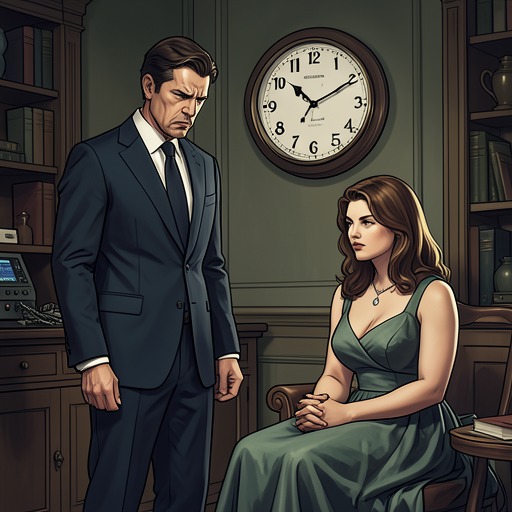
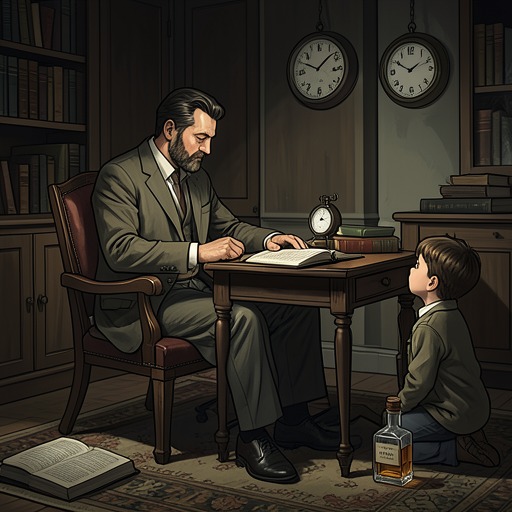
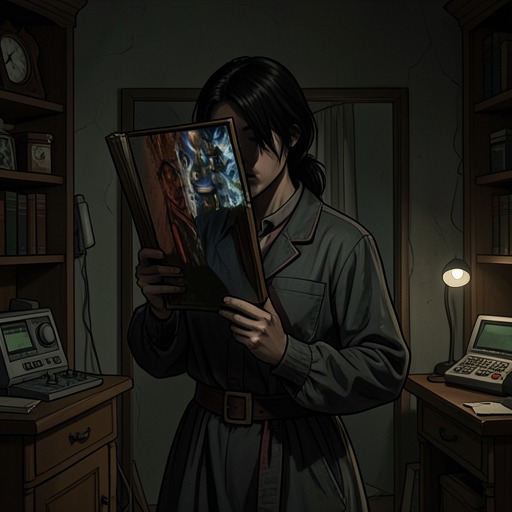
Big BrotherThe Chocolate Dump Cake is an enormous confection Edison makes for his weight-loss celebration, where it turns a family joke into a public ritual. Designed to challenge Fletcher and shared among the guests, the cake gives the party a theatrical center; later, Edison eats from it in private view of his sister and Fletcher, making the same object a sign of how fragile his discipline has become.
Design and Intended Challenge
While planning the celebration, Edison and his sister searched through the cookbooks she had accumulated during her months on protein powder and chose a recipe called “Chocolate Dump Cake.” Its name suggested a weight and scale that suited the intended spectacle. Edison then bought two rectangular baking pans so large they barely fit in the oven. When his sister questioned whether Fletcher could consume an iced, two-layer sheet cake alone, Edison argued that Fletcher had asked for a cake without specifying its size. The joke depended on taking that request literally—and enlarging it until it became a dare.
Edison openly intended the cake to unsettle Fletcher, but not to keep it from everyone else. He reasoned that a beautiful chocolate cake could not be served to a crowd if only one guest were allowed a piece. Fletcher was to receive the first and most pointed challenge; after he had tried his slice, the cake would be available to the other guests. The plan thus made the dessert both a personal provocation and a communal centerpiece, shifting the joke from a private contest into a party everyone could join.
The Cake as Party Spectacle
The cake’s scale and decoration made the challenge visible. It was about the size of a small suitcase, and Edison adorned it with a white-chocolate-and-Tootsie-Roll keyboard along one edge. In the center, M&Ms formed the number 163, a reference to his target weight. Cody quickly rearranged the last digit to make the number 161, crediting her uncle with every ounce. Elsewhere on the cake, a small porcelain crow, a magazine picture of a pie half submerged in fudge icing, and nine Scrabble tiles spelling out “Y-O-U-R W-O-R-D-S” composed a rebus-like message. Edison cut Fletcher’s piece from the section bearing the tiles, turning the serving itself into part of the joke.
Fletcher accepted the plate despite appearing rattled by being made the focus of attention. He acknowledged that he had underestimated Edison and raised a forkful in a gesture that answered the party’s ceremony. His first large bite drew cheers, and Edison then invited the rest of the guests to take a plate. The cake had begun as a way to confront Fletcher with an excessive dessert; once he accepted his part in the scene, it became something the assembled company could share.
Celebration and Contradiction
The cake stood apart from the rest of Edison’s menu. He had avoided fried and sweet foods while planning the party, but made an exception for this dessert, whose preparation required a great quantity of butter packets, two dozen eggs, and enough baking chocolate to empty more than one supermarket. At the same time, he continued running each day, extending his run to ten miles. After weighing 168 pounds, he stopped using the scale each morning and left two weeks of the calendar blank, hoping to make the first weigh-in at or below his target the dramatic centerpiece of the celebration. The cake therefore belonged to a night that joined disciplined routine, a carefully staged weigh-in, and an intentionally extravagant food challenge.
Fletcher’s response complicates the cake’s role as a weapon in the joke. After taking his first large bite, he admitted that it was good, even as he said he deserved the consequences if it made him sick. Later, he fished a Scrabble tile from his mouth, removed the icing, and said Edison was letting him off lightly under the circumstances. His willingness to participate softened the confrontation without erasing its sharp edge: the dessert could be both an elaborate taunt and something Fletcher genuinely enjoyed.
After the Formalities
After the guests had taken comparatively small servings, about two-thirds of the cake remained. The leftover dessert did not stay intact. When Pandora walked into the living room, Edison was balancing one foot on the piano bench and tipping a chair back beside the dining table. His hand was covered in icing and crumbs, and the leather trench coat and cream shirt he wore were marked with chocolate. A large section had been gouged from the cake, interrupting the sharp borders left by the original cuts. He asked Fletcher whether he could finish it, then drank from a whiskey bottle and wiped his mouth on his sleeve.
The scene reverses the cake’s public meaning. During the celebration, portions and ceremony placed the dessert within a shared performance of Edison’s achievement; afterward, the remaining cake became the center of his conspicuous overindulgence. When his sister told him to stop, Edison replied that he no longer took orders from her and invoked the end of their year of indentured service. He then claimed he had earned indulgence. The cake is thus bound to both the structure that helped mark his progress and the breach that follows: it celebrates a numerical goal, carries an affectionate family joke, and exposes how readily an occasion of control can turn into a return to excess.